
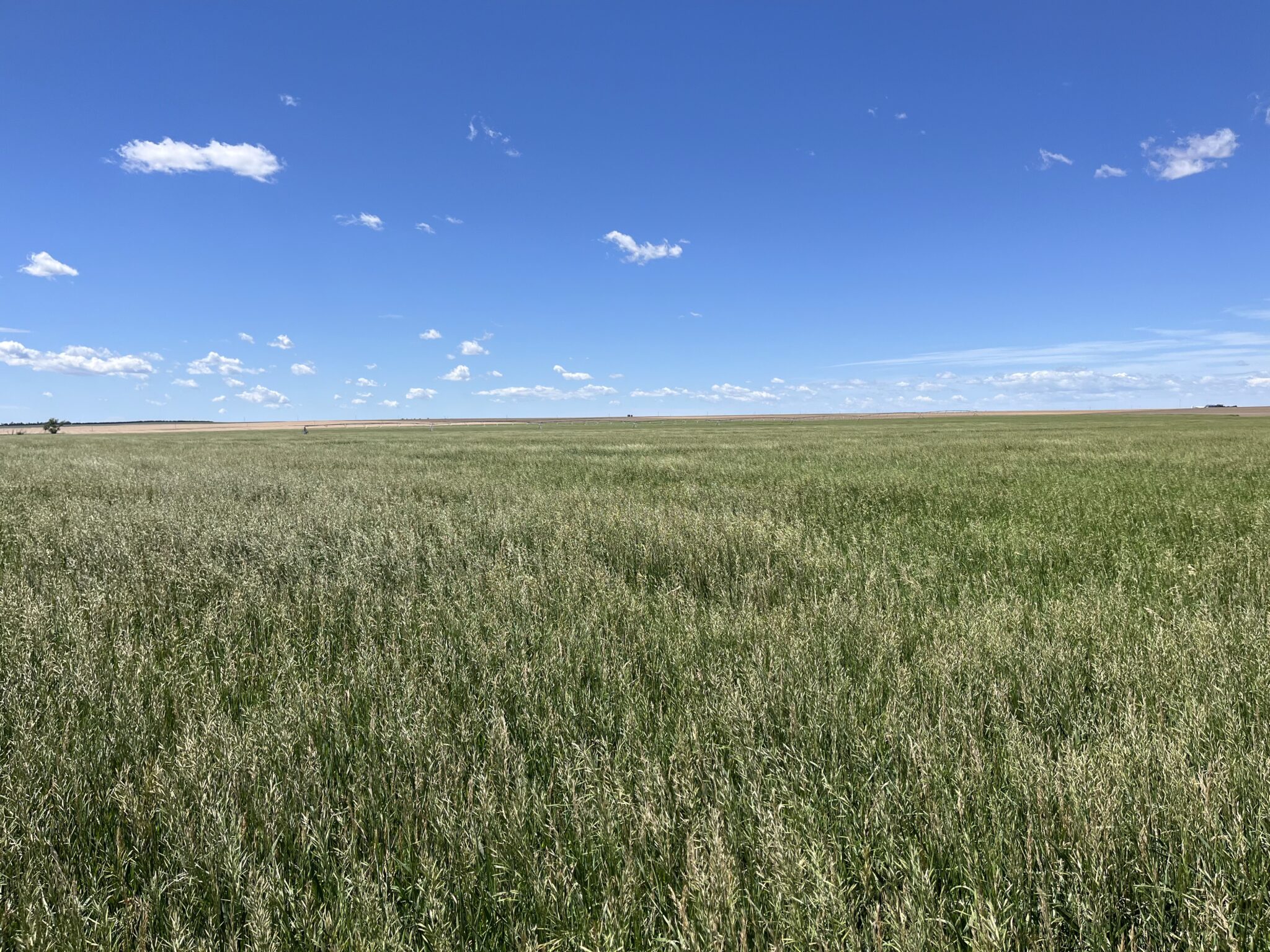
You saved your money to buy a nice little acreage in the country with animals and a lush green pasture. You’ve got the animals, so why are they standing out in a dirt lot? It’s easy to blame the seed, but many factors can affect your seeding success.
If you have irrigation water, you’re probably not asking this question, but if you’re planting under a dryland situation, timing is everything. The best time to plant is right before a nice, steady rainfall in a wet year. The problem, at least in our part of the world, is that we rarely get either a steady rainfall or a wet year.
There are many drought-tolerant grass species, both native and introduced, but all of them need moisture to germinate and get established. If you can get them through the first season, they normally send their roots deep and can withstand droughty periods.
Grasses are categorized as either warm- or cool-season, depending on the ground temperatures needed to germinate and on when they do the majority of their growth. In Northern states with short summers, it can take several years to reach maturity. Native or introduced species are more a matter of personal preference. However, native grasses produce fewer seeds and are therefore more expensive.
Grass seed is a commodity, and prices fluctuate due to climatic conditions and scarcity caused by high demand from events like fire and flood reseeding. Seed mixes are recommended, as they give you more of a chance of finding the right conditions for at least one of the grasses, rather than seeding a monoculture.
When planning your pasture, it’s a good idea to start from the ground up. If topsoil has been removed or you have reason to question fertility, take a soil sample and send it to a lab. A good rule of thumb, if weeds aren’t growing, probably nothing else will. If you’ve got weeds, get them under control before you plant, or they’ll compete for available moisture and crowd out new growth. Turning the soil risks moisture loss and can bring up dormant weed seeds, so think twice. A chemical weed killer works well, but make sure to check the label for the residual time to make sure it won’t be killing your early grass growth.
Grass can be seeded in early Spring, early Fall, or in Winter whenever the ground is clear and not frozen. It can work well to plant a grain or summer annual (oats, millet, sorghum) as a cover crop, then cut, graze, or spray it out, go back in, and seed your grass into the stubble. It is not normally recommended to plant grass in the summer, as it is difficult to keep it moist long enough to germinate and get the roots down to soil moisture.
Good seed-to-soil contact is crucial, and there are a number of ways to achieve this. Drill seeding 1/4 to 1/2 inch deep is best. Depending on the size of your pasture, it may be difficult to get a tractor and drill into it. If you can, set the drill at around 15-20 pounds per acre (this will vary depending on your grass mix) and make a couple of passes in alternate directions.
You can also broadcast the seed with a whirlybird-type spreader and then go over with an old chain-link fence, a rake, or something that will help to incorporate the seed and soil. The seed and a fiber mulch can also be blown on with a hydro-seeder. Your local seed company or extension agent should have a list of seeding contractors if you decide to go that way.
Now that your seed is in the ground, do your rain dance, but hope it doesn’t come down too hard or too fast, remember what I said about slow and gentle, order that! Depending on the species in the mix and the ground temperature, the grass can start germinating in as little as 5-7 days. Cool-season grasses start their growth cycle early in the spring, February or March in our country. Warm-season grasses need a ground temperature of 60 degrees Fahrenheit to germinate.
It is possible to plant warm- and cool-season grasses together, but cool-season grasses get such a head start that they can out-compete the slower-growing warm-season grasses. If you’re determined to have both in your pasture, it’s possible to come back and interseed the cool-season grasses the following year.
For the first season, your grass is still too tender to subject it to herbicides. If you’re having issues with weeds, it is best to wait until the grass is several inches high and mow it before the weed plants set seed. Once the grass is mature, contact a chemical supplier to determine what type of herbicide to use if you’re still having weed issues.
The hardest part for most people to hear is to keep your animals off of it as long as possible to let it mature (often that can take a year), not to overstock, and not to overgraze. Colorado State University Extension has a good stocking rate calculator on their website, as do other sites. When grazing, wait until it is 8-12″ tall and remember, “Take half, leave half,” to make sure you don’t stress the plants.
Getting a nice green pasture isn’t all luck, but with good planning and a little help from Mother Nature, you should have a nice pasture to keep your critters happy in about a year or so. I wouldn’t throw your lucky clover out just yet; we all need a little extra help.
Sidebar: Some Drought-Tolerant Grasses for Low Precipitation Areas

